This website uses cookies to ensure you get the best experience on our website. Read more

Raksha Bandhan (Rakhi): A Sacred Bond Celebrating Sibling Love
Raksha Bandhan (Rakhi): A Sacred Bond Celebrating Sibling Love
The bond between a brother and a sister is one of the most cherished and heartfelt relationships. Rooted in love, trust, and lifelong support, this bond finds its grandest celebration in the Indian festival of Raksha Bandhan, popularly known as Rakhi. The festival, rich in rituals and emotions, is celebrated not only in India but by Indian communities around the world, especially in countries like the USA, Canada, Nepal, and the UK.
What is Raksha Bandhan?
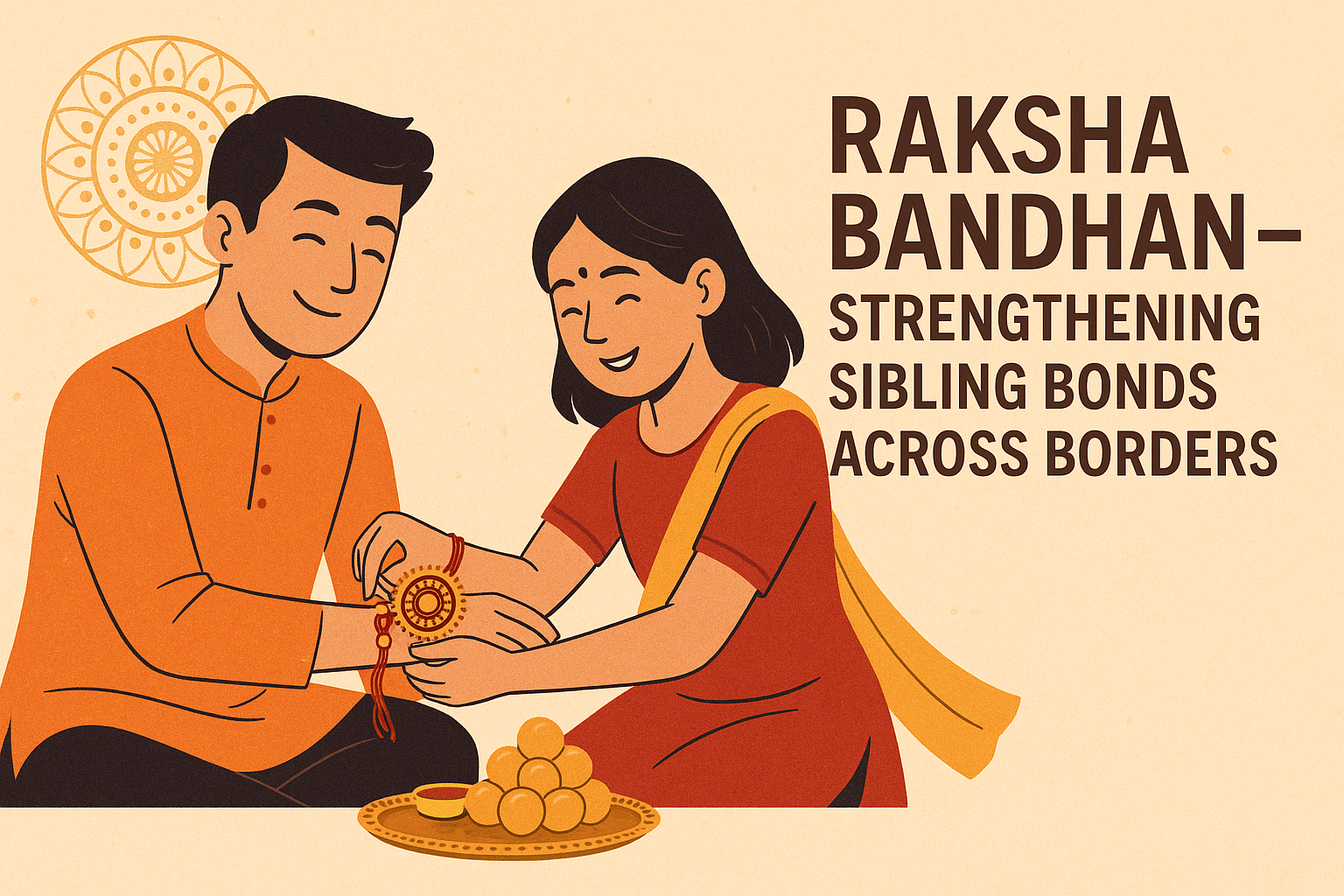
Raksha Bandhan is a traditional Hindu festival that celebrates the sacred relationship between siblings. On this day, sisters tie a protective thread called Rakhi on the wrists of their brothers, wishing them good health, long life, and prosperity. In return, brothers offer gifts and vow to safeguard their sisters under all circumstances.
The festival is typically observed on the full moon day (Purnima) of the Shravana month as per the Hindu lunisolar calendar, which usually falls in August of the Gregorian calendar.
Meaning of Raksha Bandhan
The term Raksha Bandhan is derived from two Sanskrit words – “Raksha” meaning protection, and “Bandhan” meaning bond or tie. Together, they symbolize the eternal promise of care and safeguarding that a brother offers to his sister, and the affectionate prayers of a sister for her brother’s well-being.
This sacred thread of protection goes beyond biological siblings. Rakhi is also tied to cousins, sisters-in-law (Bhabhi), maternal uncles (Mama), and even to close friends who are like family.
Cultural Significance Across Religions in India
While Raksha Bandhan is primarily a Hindu festival, it is also observed in other Indian religions and communities:
- Hinduism – Celebrated with rituals and fervor in North, West, and Central India, and across Nepal.
- Jainism – Jain monks offer protective threads to devotees as a form of blessing.
- Sikhism – Celebrated as Rakhardi in parts of Punjab, especially among Nanakpanthi Sikhs.
Mythological Origins of Raksha Bandhan
The festival of Raksha Bandhan has been celebrated for centuries and finds mention in several ancient scriptures and legends:
1. Indra Dev and Sachi (Bhavishya Purana)
During a fierce war between gods and demons, Indra Dev, the King of Devas, was struggling against demon King Bali. His wife Sachi approached Lord Vishnu for help. Vishnu gave her a sacred thread, which she tied around Indra’s wrist for protection. Indra gained strength and defeated Bali. This story marks the symbolic origin of tying Rakhi for divine protection.
2. King Bali and Goddess Lakshmi (Vishnu Purana)
When Lord Vishnu promised to stay in King Bali’s palace, Goddess Lakshmi disguised herself as a Brahmin woman and tied a Rakhi to Bali, asking for her husband's return. Touched by her gesture, Bali granted her wish. This tale highlights Rakhi’s power in building and protecting family bonds.
3. Santoshi Maa
Lord Ganesha’s sons, Shubh and Labh, wished for a sister. On the day of Raksha Bandhan, through divine intervention, Santoshi Maa was created as their sister, and the festival was celebrated joyfully.
4. Krishna and Draupadi
When Krishna injured his finger, Draupadi tore a piece of her saree and tied it to his wound. In return, Krishna pledged to always protect her. This vow became evident when he saved her from public humiliation in the Kaurava court.
5. Yama and Yamuna
Yamuna tied Rakhi to her brother Yama (God of Death) and welcomed him warmly after a long separation. Moved by her love, Yama granted her immortality and declared that siblings who celebrate Rakhi with sincerity will be blessed with long life and prosperity.
Why Is Raksha Bandhan Celebrated?
Raksha Bandhan celebrates the emotional responsibility and bond shared between siblings. It is a day when sisters pray for the happiness and longevity of their brothers, and brothers promise to protect and cherish their sisters.
Importantly, Rakhi is not confined to blood relations. It is also a celebration of chosen family, a tradition that strengthens bonds among cousins, friends, and extended family members.
Modern Raksha Bandhan Celebrations
In today’s global world, the way we celebrate Rakhi has beautifully evolved:
- Online Rakhi Shopping: Sisters now send Rakhi to brothers in the USA, UK, and other countries through trusted e-commerce platforms like Singh Cart.
- Digital Celebrations: Video calls, e-cards, and online gifting have made it easier for long-distance siblings to stay connected.
- Rakhi with Chocolates and gift hampers have replaced traditional sweets in some urban homes, adding a contemporary touch.
Currently Popular Rakhi Types & Gift Trends
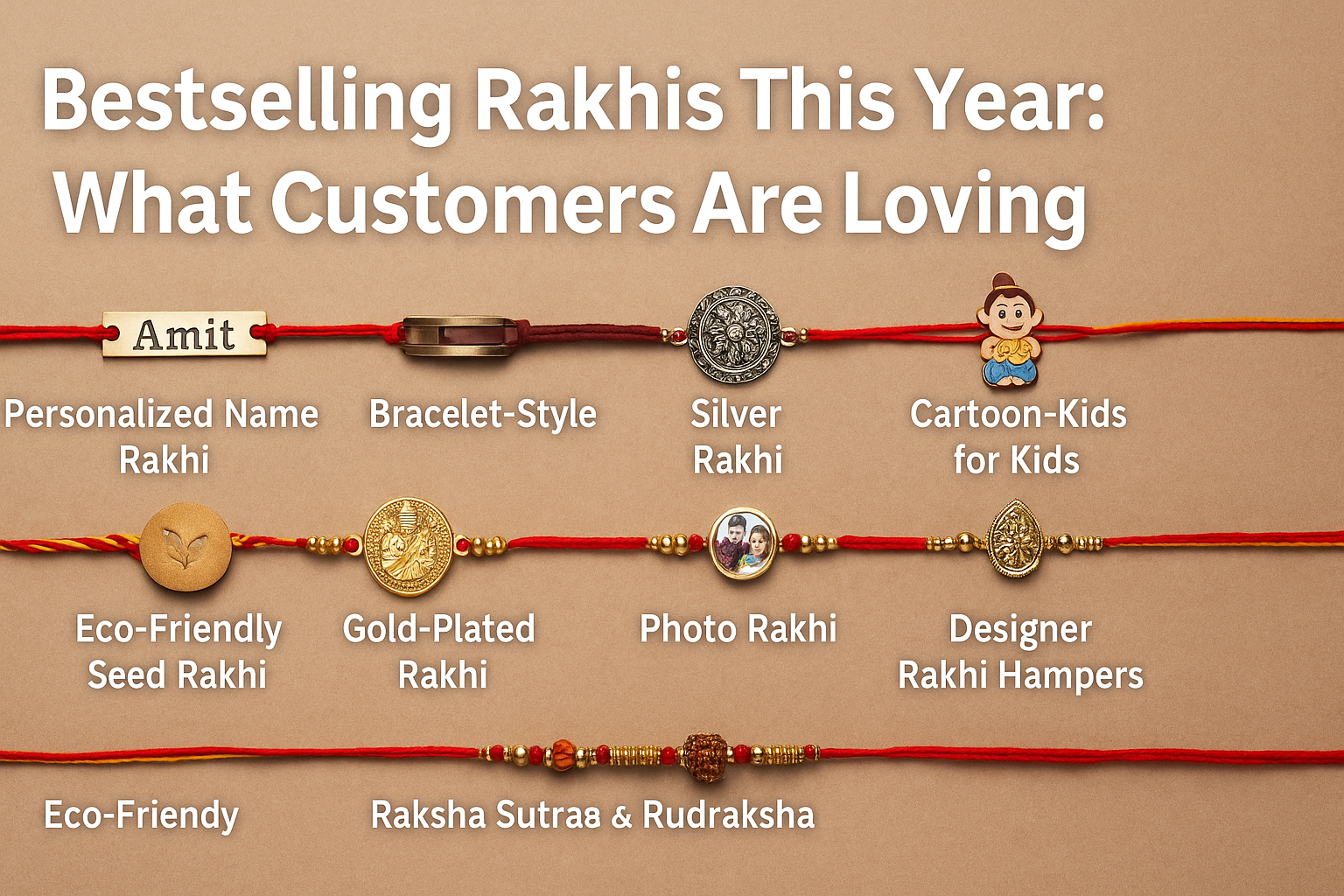
Raksha Bandhan celebrations are incomplete without Rakhis and return gifts. Here are some trending options available online:
Kids Rakhi Online
Cartoon-themed Rakhis like Jai Hanuman, Avengers, Doraemon, and Peppa Pig make the celebration extra joyful for little brothers.
Personalised Rakhi Online
Customized Rakhis with names, initials, or photos add a personal touch and are perfect for siblings who love thoughtful gestures.
Set of Rakhi for Bhaiya Bhabhi
Designer Rakhi sets with lumba for Bhabhi are ideal for married brothers and beautifully represent both relationships.
Conclusion
Raksha Bandhan is a vibrant celebration of love, memories, and mutual respect. It transcends generations and geographies, reminding siblings to stand by each other through thick and thin.
Whether you are near or far, send your heartfelt wishes, choose the perfect Rakhi online, and make this Raksha Bandhan truly unforgettable. With Singh Cart, find everything from Rakhis for kids, gifts for sisters, personalised Rakhi sets, and chocolates delivered anywhere across the USA.

Singh cart
The tiles are highly resistant to water and dirt and can be cleaned, so they are compatible with the cultivation of plants and cooking and the functions.
Leave a reply
Your email address will not be published. Required fields are marked*
Stephenspona
Jul 09, 2025 02:15
¿Quieres un sistema de natación en casa? Las opciones de Intex y Bestway ofrecen estructuras adaptables para todas las familias .
Sus piscinas de estructura metálica garantizan estabilidad en cualquier clima, mientras que los modelos hinchables son ideales para niños .
Modelos populares incluyen sistemas de limpieza, asegurando bajo consumo de energía.
Para espacios reducidos , las piscinas modulares de 4 m no requieren obras.
Opciones adicionales como cobertores térmicos, escaleras de seguridad y juguetes acuáticos mejoran la experiencia .
Con garantía del fabricante , estas piscinas ofrecen valor a largo plazo .
https://www.mundopiscinas.net